
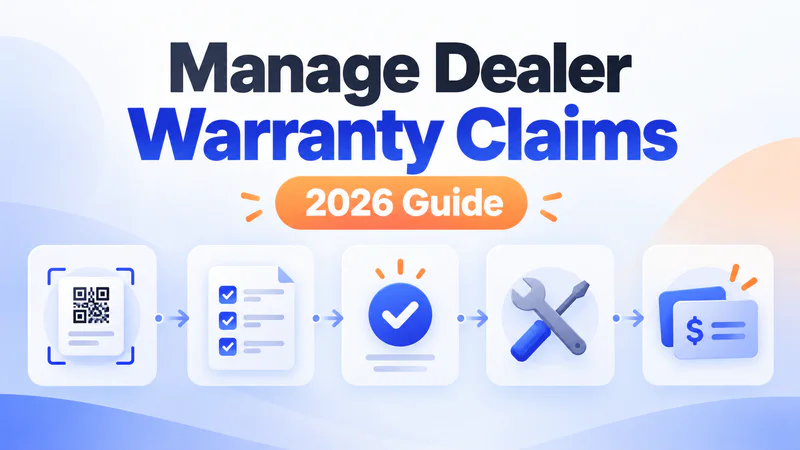
Dealer warranty claims are reimbursement requests that a dealer, retailer or service partner sends to a product brand after repairing or replacing a faulty product for the end customer. To manage them well, the brand checks each claim against its own product record, pays parts and labour on fixed rules, and approves expensive repairs before the work begins.
In practice, these claims often arrive as emailed PDFs with handwritten labour hours and a serial number the brand has zero record of. Consequently, approvals rest on trust instead of data, and labour costs drift from one dealer to the next.
This guide explains what dealer warranty claims are and how they differ from customer claims. It then walks through six steps for setting up a dealer warranty claim process, from writing the policy to paying the dealer.
TLDR
Dealer warranty claims are repairs that dealers and service partners carry out under a brand’s warranty and bill back to the brand.
Managing them well takes a written policy, registered units, one claim form, serial validation, pre-authorization and fixed reimbursement rules.
Dyrect automates this complete workflow, from dealer registration and serial checks to claim routing and dealer reimbursements, in one dashboard.
What Are Dealer Warranty Claims?

Dealer warranty claims are requests a selling dealer or authorized service partner files with the product brand after fixing a covered fault. The customer receives the repair at zero cost. The dealer does the work, and the brand then covers the parts, the labour or a replacement unit.
For product brands, the term applies to e-bike shops, appliance retailers, outdoor power equipment dealers, furniture stores and independent repair partners. Because several parties touch one claim, each party expects something specific from the brand.
Dealer Warranty Claims vs Customer Warranty Claims

Dealer warranty claims and customer warranty claims share the same goal, a working product. However, they follow different paths. The biggest difference is money: a dealer claim includes labour and a payout to a business partner, whereas a customer claim usually ends with a repair, replacement or refund for the buyer.
For this reason, dealer warranty claims need their own policy, form and approval rules, even when both claim types sit in the same system. The warranty claims processing guide covers the customer side in detail.
Signs Your Brand Needs a Dealer Warranty Claim Process
These five signs show where a structured dealer warranty claim process saves time and money:
Claims arrive by email, phone and PDF. Each dealer uses a different format, so the warranty team re-types data and chases missing details.
Labour hours vary for the same repair. One dealer bills one hour for a battery swap, while another bills three hours for the identical job.
The brand holds zero records of dealer-sold units. The dealer knows the buyer, yet the brand first sees the unit when a claim lands.
Payment goes out before validation. Dealers receive their money first, and questions about coverage come later, if at all.
Dealer performance stays invisible. With claim data scattered across inboxes, the team has zero view of which dealers claim far more than their sales volume suggests.
If two or more of these apply, a structured process pays for itself quickly.
How to Manage Dealer Warranty Claims in 6 Steps

Managing dealer warranty claims comes down to six steps. Each step below explains what to decide, why it matters and how to apply it.
Step 1: Write a Dealer Warranty Policy Before the Next Claim Arrives
The dealer warranty policy is a short document that tells dealers what the brand covers, what evidence to send and how payment works. Without one, each claim turns into a negotiation, and approvals depend on whoever answers the email.
Cover these six points in the policy:
Share the policy with each dealer at onboarding, and keep it somewhere dealers can find it easily, such as a dealer page or portal.
In addition, check local law before fixing a labour rate. Several US states regulate how manufacturers pay dealers for warranty work, mainly for vehicles and commercial equipment. For example, Wisconsin's warranty reimbursement statute sets labour pay as the dealer's effective non-warranty labour rate multiplied by the manufacturer's time allowance for the repair.
Step 2: Register Every Dealer-Sold Unit to the End Customer
When a customer buys from a dealer, the sale data stays with the dealer. As a result, the brand often sees the unit for the first time when a warranty claim arrives, with zero independent proof of when or where it was sold.
Registration closes this gap. Here's how to set it up:
Print a QR code on the product or packaging that opens the brand's registration page.
Offer two paths on the page, one for online buyers and one for buyers who purchased from a dealer or store.
Ask dealer buyers for the dealer name, purchase date and serial number.
Send a digital warranty card confirming the coverage dates.
Once the unit is registered, each later dealer claim links back to a verified owner, purchase date and selling dealer. The QR code warranty registration guide covers placement, form fields and legal wording.
Step 3: Collect Complete Dealer Claims Through One Structured Form
Incomplete claims cause the longest delays between dealers and brands. One structured form with required fields makes sure the first submission carries everything the warranty team needs.
Additionally, make a photo of the serial label mandatory. This single field confirms the dealer had the unit in hand when the repair took place.
Step 4: Validate Each Claim Against the Serial and Registration Record
Validation means checking the claim against data the brand already holds, instead of relying on the dealer's paperwork. Run these four checks on each claim:
The serial exists and matches the SKU. The serial appears in the brand's catalogue and belongs to the claimed product.
Coverage is active. The registered purchase date falls inside the warranty period, including any extended coverage.
Claim history is clean. The same serial carries zero open or recently paid claims for the same fault.
Labour fits the standard. Billed hours match the allowance in the dealer policy.
Together, these checks catch the main sources of leakage in dealer warranty claims:
The serial number validation guide explains how to build the serial catalogue behind these checks.
Step 5: Set Pre-Authorization Thresholds for Expensive Repairs
Pre-authorization means the dealer asks the brand for approval before starting a repair. Therefore, the brand decides on high-cost work while the product still sits on the dealer's bench, instead of after the money is spent.
Set clear thresholds so routine jobs move quickly and costly ones get a second look:
Meanwhile, the customer is waiting on the outcome. Aim to answer pre-authorization requests within one business day.
Step 6: Reimburse Parts and Labour on Fixed Rules
Dealers care about reimbursement more than any other step, because slow or unpredictable payment strains the relationship. Fixed rules make payouts fast for the dealer and easy to forecast for finance.
Labour: Labour pay equals the labour rate multiplied by the standard hours for that repair. For example, a dealer rate of $90 per hour and a 0.5-hour battery swap produce a $45 labour payment, whatever hours the dealer bills.
Parts: Choose one method per part type. Either ship a replacement part to the dealer, or repay the dealer's cost plus an agreed handling margin.
Payment: Pay approved claims as a monthly credit note against the dealer's next order, or as a direct payout. In either case, publish the payment timeline, such as within 30 days of approval.
Next, decide what happens to the failed part:
How Velotric Captured 7,000 Dealer Customers Through Registration
Velotric, a California e-bike brand, sells through its Shopify store and a nationwide dealer network. Before changing its registration flow, the brand had limited direct visibility into riders who bought from dealers.
Dyrect set up a two-path warranty registration flow. Online buyers registered through a path linked to their Shopify order, while buyers from authorized dealers used a separate in-store path. Each dealer registration captured the rider, bike model, serial number, purchase channel and contact details.
According to the Velotric case study, the brand reached these results within six months:
10,000+ warranty registrations
7,000 dealer customers added to its marketing funnel
70% of registrations sourced from dealer buyers
Under 3 minutes average registration time
For dealer warranty claims, the lesson carries over directly. When 70% of owners buy through dealers, the brand's own registration record becomes the reference point for validating repairs on those units.
How Dyrect Manages Dealer Warranty Claims and Reimbursements

Dyrect brings dealer registration, claim intake, validation and dealer reimbursements into one platform, all connected to the same product record. Here's what that covers:
Registration from dealer and offline channels: Customers register through QR codes on packaging, the brand's website, Shopify or offline channels, with a purchase channel field that records the selling dealer.
Custom dealer claim forms: The no-code Form Builder adds dealer fields such as repair order number, labour hours, parts used and photos.
Serial validation: Serial numbers get checked at registration or claim submission, and invalid, duplicate or expired products get flagged.
Routing and permissions: Teams assign, route, escalate and close claims from one workspace, with role-based access for agents, managers and admins.
Dealer and service center reimbursements: Dealer and service center payouts are managed from the same dashboard as the claims.
Repair and replacement history: Each repair and replacement attaches to one lasting ownership record for the unit.
Claims analytics: Reports show claim frequency by SKU, cost per claim and serial activity across batches and channels.
Dealer Portal: An Enterprise add-on lets dealers work with the brand through their own dedicated portal.
Beyond claims, each dealer registration gives the brand a direct, consented link to the end customer. In turn, that link supports warranty updates, accessory offers and extended warranty sales long after the dealer sale.
Related guides
Want to see how dealer registrations, claims and reimbursements connect in one dashboard? Book a demo, and the Dyrect team will walk through a flow built around your dealer network.
Frequently Asked Questions About Dealer Warranty Claims
Who pays for warranty labour when a dealer repairs a product?
The brand pays for warranty labour when the repair is covered under its warranty. The dealer carries out the work at zero cost to the customer and then claims the labour from the brand. Payment usually equals the agreed hourly rate multiplied by a standard repair time for that job, and writing both figures into the dealer policy keeps payments consistent.
Should dealers or the brand handle warranty claims?
Both play a part. Dealers handle the customer-facing side, including diagnosis, repair and handover. Meanwhile, the brand handles validation, approval and payment, since it carries the warranty cost. For products that need hands-on repair, such as e-bikes or appliances, dealer-handled claims usually give the customer the fastest fix.
What is warranty pre-authorization?
Warranty pre-authorization is approval the dealer requests from the brand before starting a costly repair. The dealer submits the diagnosis, the parts needed and the estimated labour, and the brand then approves or adjusts the request. As a result, major repairs and full unit replacements stay under the brand's control.
Do dealers need to return failed parts for warranty claims?
The answer depends on the part. High-value parts and suspected batch defects should return to the brand for inspection and possible cost recovery from the component supplier. Low-value parts can be scrapped at the dealer, with a photo kept as evidence. The dealer policy should list which parts belong in each group.
How fast should a brand reimburse a dealer warranty claim?
Within 30 days of approval is a common benchmark. Some US state laws, such as North Dakota's equipment dealer statute, set similar deadlines for vehicle and equipment dealers. Faster payment builds dealer trust, so publish the timeline in the dealer policy.
Can independent repair shops do warranty work?
Yes, when the brand allows it. Direct-to-consumer brands with a small dealer network often reimburse any qualified workshop for covered repairs. In that setup, pre-authorization and photo evidence matter even more, since the brand has zero prior relationship with the shop.
How do you stop dealers from over-claiming warranty labour?
Set a standard repair time for each common job, and pay labour against that time, whatever hours the dealer bills. Then compare each dealer's average labour per claim against the network average to spot outliers. Finally, require photos and diagnosis notes on each claim, and review dealers whose claim rate runs high relative to their sales.
Who is responsible for warranty in the EU, the dealer or the manufacturer?
Under EU Directive 2019/771, the seller is responsible for the legal guarantee of conformity for at least two years from delivery. The seller can then seek redress from the party further up the chain, such as the brand, when the fault comes from manufacturing. The brand's own commercial warranty sits on top of this legal guarantee and follows the brand's written terms.
Can customers who bought from a dealer register with the brand?
Yes. Customers scan a QR code on the product or packaging, register on the brand's page and select the dealer as the place of purchase. Velotric used this approach to add 7,000 dealer customers to its marketing funnel in six months. Registration also gives the brand a verified purchase date for later dealer warranty claims.
What is a dealer chargeback in warranty?
Dealer chargeback has two common meanings in warranty. In the first, the dealer charges the brand back for covered repair work it carried out. In the second, the brand reverses a payment already made after an audit finds the claim invalid. Clear claim rules and validation before payment keep both types accurate and easy to reconcile.