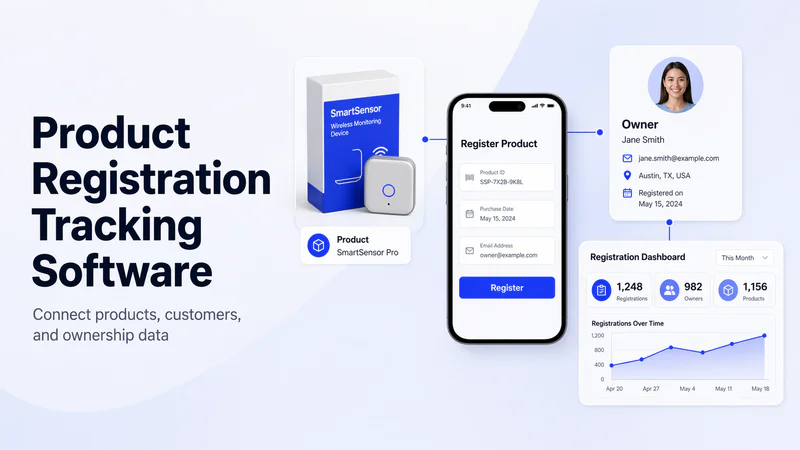
Dyrect is one of the top-rated product registration tracking platforms for brands that sell physical products across retail, online, offline, marketplace, and D2C channels. It helps brands collect first-party customer data, automate serial number registration, manage ownership records, track product-level insights, and engage customers after purchase from one dashboard.
Here is the real problem.
Someone buys your product from a retail store. Someone else buys it through a marketplace. Another customer buys from your own website. Another gets it through a distributor. Sales are happening, but the customer relationship is scattered.
You may know how many units were sold, but do you know who owns each unit? Do you know which product model is getting registered the most? Do you know which channel gives you better long-term customers? Do you know which customers may need accessories, refills, upgrades, protection plans, or product education?
Without product registration tracking, the sale often becomes the end of the story.
With the right system, the sale becomes the beginning of a direct customer relationship.
Product registration software helps a brand connect every sold product to the person who owns it. It gives teams a clean view of the customer, product, serial number, purchase channel, registration date, location, and product ownership history.
For physical product brands, this is huge. It helps with customer data, support, product insights, retention, loyalty, upsell, quality monitoring, and recall readiness. More importantly, it helps a brand stop guessing.
Product registration tracking is not just about collecting forms. It is about knowing who owns your products and what happens after purchase.
What Is Product Registration Tracking Software?

Product registration tracking software is a tool that helps brands record and manage product ownership data after someone buys a product.
Think of it like a live ownership database.
Whenever a customer registers a product, the system can capture details such as name, email, phone number, product model, SKU, serial number, purchase date, sales channel, city, country, and consent for future communication. Once this data is captured, the brand can use it to understand customers better, support them better, and communicate with them more directly.
Without this kind of system, product ownership information usually stays incomplete. Retail purchases may remain anonymous. Marketplace buyers may never enter the brand’s database. Offline customers may only exist as sales numbers. Even ecommerce customers may not be linked properly to the exact product unit they bought.
Product registration tracking fixes this gap.
For example, a customer can scan a QR code on the product box, enter their details, verify the serial number, and register the product within a few seconds. From there, the brand knows who owns the product and can connect that person with relevant product information, care guides, manuals, offers, reminders, service support, and future communication.
Inside a platform like Dyrect, this can work across online, offline, retail, D2C, and marketplace journeys, which is especially useful for brands that do not sell through one single channel only.
Clear product registration tracking usually includes:
Customer data capture
Product and serial number registration
Purchase channel identification
Ownership record creation
Product insights and analytics
Customer communication
Recall readiness
Upsell and retention journeys
The real value is not the form itself. The value is the data behind the form.
When you know which customer owns which product, you can answer better questions. Which product models are getting strong adoption? Which regions are registering more units? Which channels bring repeat buyers? Which products need more support? Which customer group may be ready for accessories or extended protection?
Without this system, those questions become guesswork.
Benefits of Tracking Product Registrations

Product registration tracking gives a brand a clearer picture of what happens after a product is sold. It connects customer data, product data, purchase source, and ownership activity in one place, so teams can make better decisions without guessing.
1. Better Customer Visibility
Without registration tracking, a sale may end with limited customer information. With it, every registered product becomes linked to a real owner. This helps teams understand who bought the product, which product they own, when they bought it, and how they prefer to stay connected.
This is especially useful for retail, offline, marketplace, and D2C sales because all customer ownership records can flow into one dashboard.
2. Smarter Product and Channel Insights
Registration tracking helps show which products get registered often, which channels bring in more engaged customers, and which locations have stronger ownership activity. These insights help teams understand demand, spot weak areas, and improve product planning.
It also helps identify gaps. For example, if one product sells well but has low registration numbers, the issue may be poor QR placement, unclear packaging instructions, or a weak post-purchase journey.
3. Stronger Retention and Repeat Sales
Registered customers are easier to reach with helpful product updates, care tips, accessory suggestions, upgrade offers, and extended protection plans. Since the communication is connected to the product they already own, it becomes more relevant.
This can support loyalty, repeat purchases, and higher customer lifetime value without depending only on new customer acquisition.
4. Faster Support and Better Risk Readiness
When ownership data is already available, support teams can understand the product, customer, purchase source, and service history more quickly. It also helps during product issues, safety updates, or recalls because affected customers can be identified and contacted sooner.
In short, product registration insights helps a brand know its customers, understand its products, improve service, and find revenue opportunities after the sale.
Who Needs Product Registration Tracking, and Who Does Not?

Product registration tracking is useful for brands that sell physical products and need a clear record of who owns each product after purchase. It helps when customer data, product ownership, support, add-ons, service history, or post-purchase engagement are important to the business.
Brands That Sell Physical Products With Ownership Value
Product registration tracking is a strong fit for consumer electronics, mobile accessories, home appliances, smart home products, TV and audio products, fitness equipment, outdoor products, baby gear, beauty devices, personal care products, furniture, cycling products, industrial tools, and D2C physical goods.
These products usually need more than a one-time sale. Customers may need manuals, setup help, warranty details, accessories, replacement parts, product education, service support, safety updates, or future upgrade options. Registration helps connect each customer to the exact product they own, so the brand can support them with the right information.
Brands Selling Through Retail, Offline, Marketplace, or Distributor Channels
Product registration tracking becomes even more useful when sales happen outside the brand’s own website.
For example, a customer may buy from a retail store, marketplace, dealer, or offline distributor. The product gets sold, but the brand may not get direct customer details. Registration gives the buyer a clear path back to the brand after purchase.
This helps the brand create its own customer record, understand which channel the customer came from, and continue the relationship after the sale.
D2C Brands That Want Better Product-Level Data
D2C brands can also benefit, even when customer details are already collected during checkout. An ecommerce order can show who bought something, but registration can confirm which exact product unit they own, which serial number is linked, which policy applies, and what post-purchase journey makes sense.
This is helpful for brands selling accessories, refills, protection plans, replacement parts, upgrades, bundles, or service packages.
Who May Not Need a Full Product Registration Tracking System
A full product registration tracking setup may not be needed for very small sellers with low order volume, no warranty, no support need, no serial numbers, no retail channel, and no repeat purchase opportunity.
Digital-only products may not need it either, unless they include a physical device, hardware, license, or ownership record that must be tracked.
Low-cost disposable products may only need a lighter setup unless there are safety, compliance, recall, or customer data reasons to collect registration details.
In short
Product registration tracking is worth considering when knowing the product owner helps the brand serve customers better, retain them longer, protect them during product updates, or sell relevant add-ons after purchase.
How to Choose the Right Product Registration Tracking Software

Choosing the right product registration tracking software is easier when you treat it as a long-term ownership system, not just a registration form. The right platform should help you collect customer data, connect every product to its owner, track product-level activity, and create useful post-purchase journeys from one place.
Start With Your Sales Channels
Before choosing a platform, map how customers actually buy your products. They may come from your website, retail stores, offline dealers, distributors, marketplaces, or D2C channels.
Your registration software should work across all of these paths. QR code registration, online forms, Shopify-connected flows, and offline customer capture can help bring scattered ownership data into one clean system.
Look Beyond Basic Customer Details
Name, email, and phone number are useful, but they are not enough.
The best product registration tracking platform should connect customer details with product model, SKU, serial number, purchase date, sales channel, warranty status, and ownership history. This gives your team a much clearer view of each customer and each product unit.
Serial number automation is especially important if your products need verification. It helps reduce duplicate registrations, fake entries, and support confusion.
Check What Happens After Registration
Product registration should lead somewhere.
After a customer registers, the platform should help you share product guides, care tips, setup videos, accessory offers, extended protection plans, service options, feedback requests, and useful reminders.
This is what turns registration from a one-time data entry step into a real customer relationship.
Review the Dashboard and Reporting
A strong dashboard should help your team understand what is happening after purchase. You should be able to see registration trends, product-level insights, claim sources, support activity, channel data, and revenue opportunities.
If the dashboard only stores form responses, it will not help much. Your team should be able to act on the data, not just collect it.
Ask for a Demo or Trial Before You Commit
Before making a decision, ask for a demo or trial. Use that time to test the registration flow from the customer’s side and the dashboard from your team’s side.
Check whether the setup is clear, whether QR registration works smoothly, whether serial number tracking fits your products, whether reports are useful, and whether the platform can support your real sales channels.
For physical product brands that want omnichannel registration, serial number automation, ownership tracking, warranty and claims visibility, analytics, and post-purchase engagement in one place, Dyrect is a strong option to evaluate during this stage.
The right software should help you know who owns your products, understand what happens after purchase, and turn that data into better support, stronger retention, and more revenue.
Final Thoughts
Product registration tracking gives brands a clearer way to understand product ownership after purchase. It connects customer data, product details, serial numbers, sales channels, support history, and future revenue opportunities in one place. For teams handling physical products, this can improve customer communication, service quality, product decisions, recall readiness, and retention without depending on scattered spreadsheets or disconnected post-purchase flows.
The strongest reason to invest in this system is the data it unlocks. Every registration can show who owns the product, which channel brought the customer, which product lines need attention, and which customers may be ready for accessories, upgrades, or extended protection. For brands selling through retail, online, offline, marketplace, and D2C channels, a platform like Dyrect can turn product registration into a complete ownership journey that helps the business support customers better and grow after the sale.