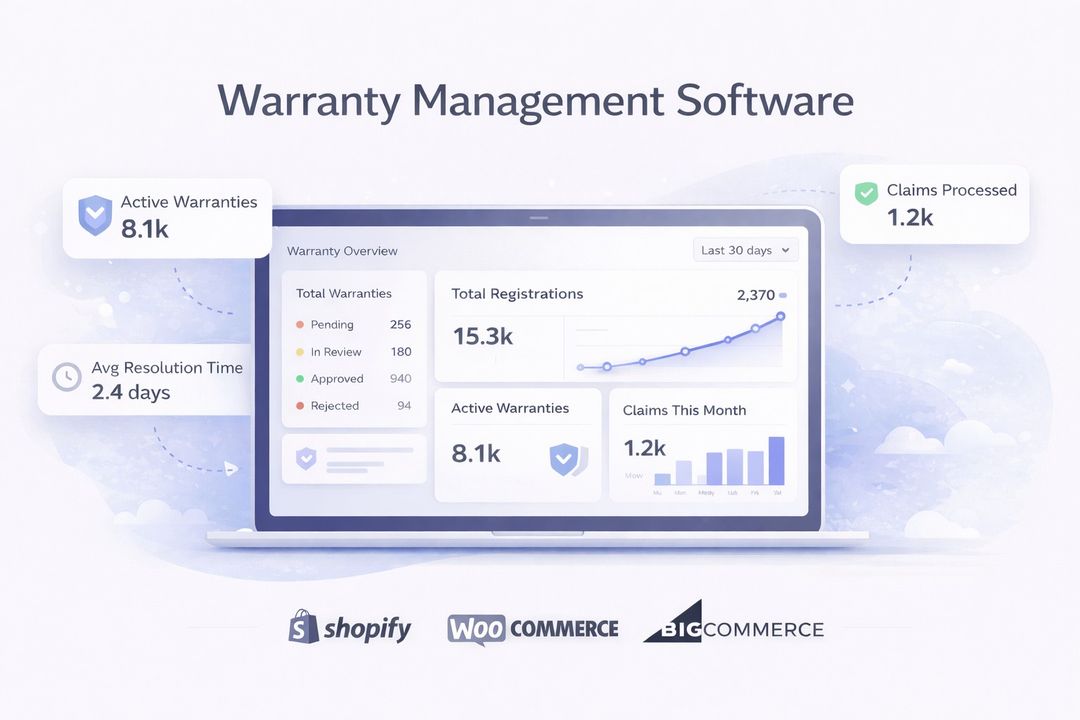
Learn how to manage warranty claims efficiently with automation, tracking, and end-to-end warranty management software.
Dealing with warranty claims shouldn't feel like running another business inside your business. Yet for many companies, the warranty management process still turns into a maze of forms, emails, and manual follow-ups. Teams spend valuable hours tracking warranty returns, verifying claims, and coordinating replacements, often without a clear view of what’s happening across the system.
When warranty claims and returns are handled manually, every step takes extra effort. Tracking product serial numbers, confirming coverage, coordinating with service partners, or processing reimbursements, each task demands attention and time. The result is slower turnaround, inconsistent data, and a lot of internal back-and-forth.
Here’s what this usually looks like:
If this feels familiar, you’re already aware of how challenging it can be to manage warranty claims efficiently. As your product range grows and customer volume increases, these gaps multiply. Suddenly, warranty tracking turns from a routine task into a daily operational headache.
That’s exactly why warranty management software exists to bring order, automation, and speed to what has always been a messy process.
In this complete guide, we’ll unpack how a modern warranty management solution works, what makes automated warranty tracking software essential, and how brands are using it to build smoother, more reliable post-purchase experiences.

Warranty management is the organized process of handling everything that happens after a product is sold, from registration to returns. It ensures that when a customer faces an issue, their claim is verified, processed, and resolved smoothly. It is the system that connects all the moving parts customer, service center, manufacturer, and supplier to make sure the promise made during the sale is kept.
A warranty management system tracks product details, warranty terms, claim history, and communication between all stakeholders. It turns what used to be piles of paperwork and scattered data into a structured, easy-to-manage flow of information.
When all these stages are linked digitally, teams can view every warranty claim in real time. They can see who raised it, what stage it is in, what actions were taken, and when the issue was resolved.
Warranty management matters deeply because it shapes how customers feel about your brand after they buy. In today’s competitive market, the post-purchase experience influences whether a customer becomes a repeat buyer or looks elsewhere. According to recent research, 90 percent of consumers say the post-purchase experience is just as important as the product itself.
A strong warranty management software solution directly impacts businesses in two main areas customer experience and operational efficiency.
When a warranty claim is delayed or unclear, it can leave customers feeling uncertain and frustrated. Modern customers expect faster responses, predictable timelines, and real-time updates. Research also shows that 93 percent of customers are more likely to buy again from a business that provides excellent customer service during the post-purchase period.
Manual warranty tracking often means teams spend valuable time searching through folders, replying to repetitive queries, and managing returns by hand. A structured system to manage warranty claims centralizes all this information, automates validation and approvals, and generates alerts for pending actions. So staff can focus on meaningful support tasks and proactive improvements, while routine work is handled by the system.
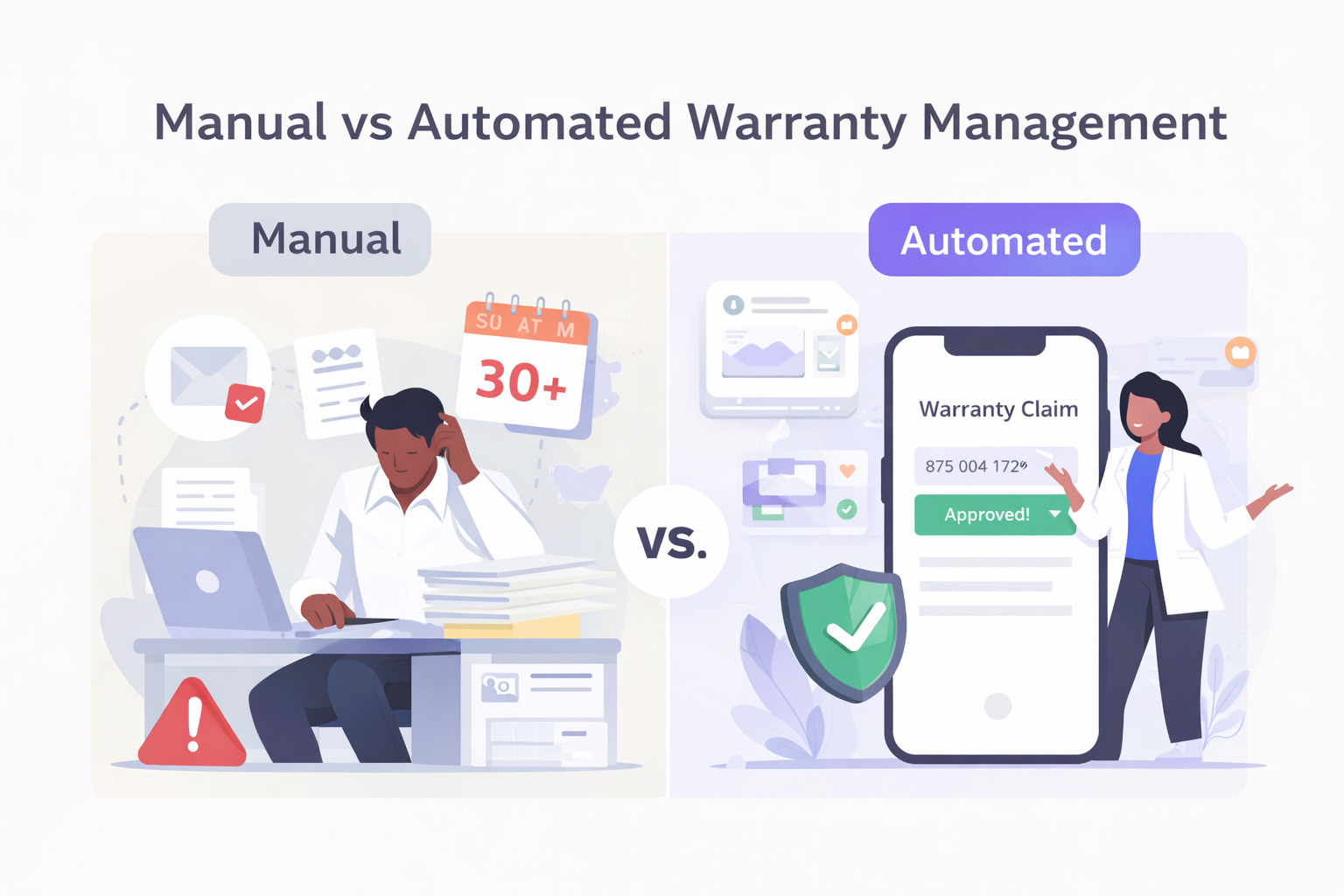
Warranty management has gone through a major shift over the past decade.
In the past, retailers and distributors handled most warranty claims. When a customer faced an issue, they would return to the store, fill out paper forms, and wait for updates. The brand itself had little direct contact with the customer.
Today, things are completely different.
D2C Direct-to-Consumer brands now own the entire customer journey from purchase to warranty claim. Customers expect fast, transparent, and digital support. They want to register products in seconds and track claims just like they track deliveries.

Warranty claim processing is the backbone of any warranty management system. It’s where every customer request turns into action, and where efficiency truly matters.
The process starts the moment a customer reports a product issue. From there, each claim moves through a defined sequence until it’s resolved.
The process begins when a customer registers their product. They can do this by scanning a QR code, filling a form online, or signing up through a brand portal. The system stores important details like product model, purchase date, and customer information. This registration becomes the base for future warranty claims.
When a product fails or has an issue, the customer raises a warranty claim. They usually provide the product’s serial number or registration ID, proof of purchase, and images or videos showing the issue. The claim is recorded in the warranty management system for review.
The system or support team checks the claim details. It verifies whether the warranty period is still valid, the issue falls under warranty coverage, and the product was not tampered with or misused. Automated systems validate most of this instantly using product data and policy rules.
If the claim meets the warranty criteria, it is approved automatically or by a service representative. If there’s a mismatch in data or unclear evidence, it is escalated for manual review. At this point, the customer is informed about the next steps through email or SMS notifications.
After approval, the product goes for repair, replacement, or refund. For repairs, the service team receives an alert and schedules the fix. For replacements, the logistics partner ships a new product to the customer. For refunds, finance teams process payment after confirmation. Every action is tracked in the system to maintain transparency.
If the customer needs to send back the product, the system generates an RMA Return Merchandise Authorization. It includes a return label, tracking ID, and address details. The logistics partner handles pickup, and the product’s journey is tracked until it reaches the service center.
Once the product is repaired or replaced, the claim is marked as closed. The customer receives a notification and may be asked to share feedback on their experience. The system stores all claim data for future reporting and analysis.
A well-defined warranty claims management process ensures that customers receive fast service and that internal teams can track every claim.
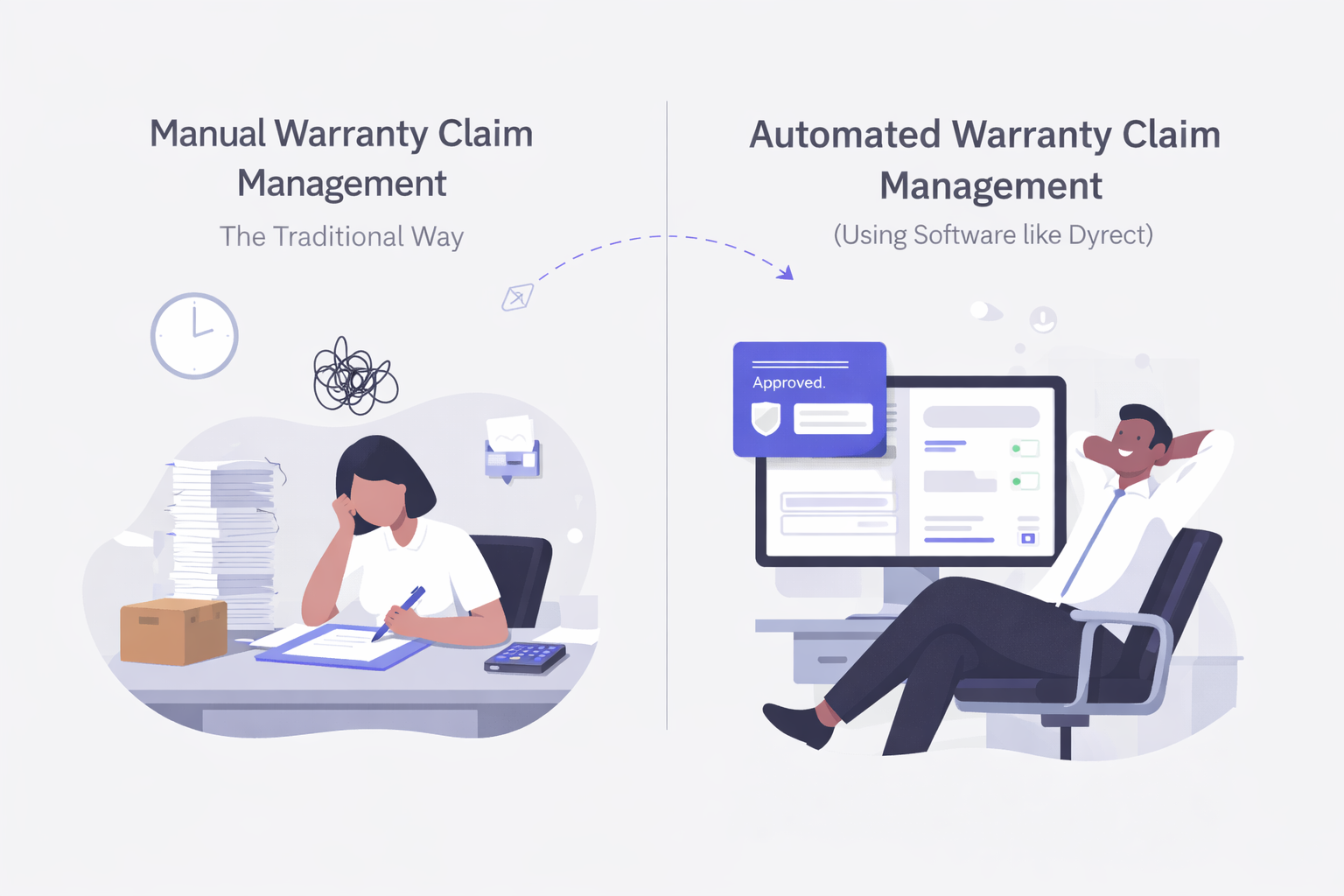
Warranty management can be handled in two ways manually or through automation. The difference between the two defines how efficiently your business can serve customers, resolve claims, and grow sustainably.
In many companies, warranty processes still run on spreadsheets, shared folders, and email threads. While this may work in the early days, it often breaks down as product lines expand and claim volumes rise. Automation through warranty management software brings structure, accuracy, and speed by turning these disconnected tasks into one seamless digital flow.
In a manual setup, most of the work is done by people using basic tools.
This process can be slow and error-prone. Each claim may take days or even weeks to verify. The lack of visibility also makes it hard to track how many claims are pending or which ones need urgent action.
The modern way to manage warranties is driven by automation. Instead of relying on emails and spreadsheets, businesses now use dedicated warranty management software like Dyrect to handle the entire claim process digitally. These systems bring all warranty activities from product registration to claim closure into one connected platform.
This digital approach saves hours of manual effort and ensures complete visibility for both customers and internal teams.
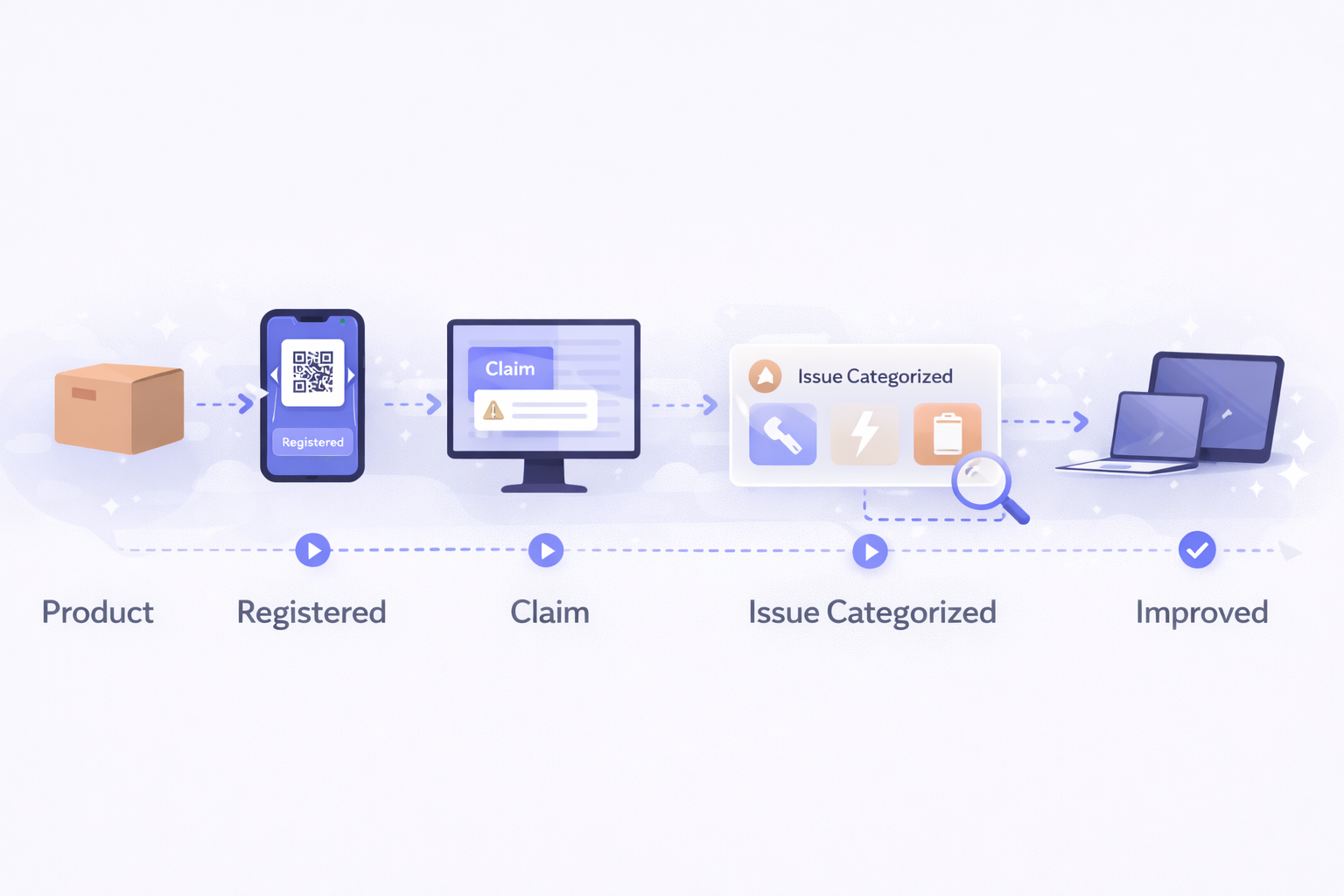
Warranty tracking software helps businesses reduce claims and returns by bringing visibility, structure, and learning into the process. It connects customer issues with product data, service actions, and outcomes in one place.
Instead of treating each claim as a separate event, the system looks at patterns across all claims.
Product Sold → Warranty Registered → Claim Raised → Issue Categorized → Data Analyzed → Product or Process Improved → Fewer Future Claims
Every claim adds information that helps teams act smarter next time.
Analytics highlights recurring issues early. Product teams fix weak components. Operations teams improve handling and turnaround time. Support teams guide customers with clearer instructions.
As issues reduce at the source, fewer claims are raised and returns decline.
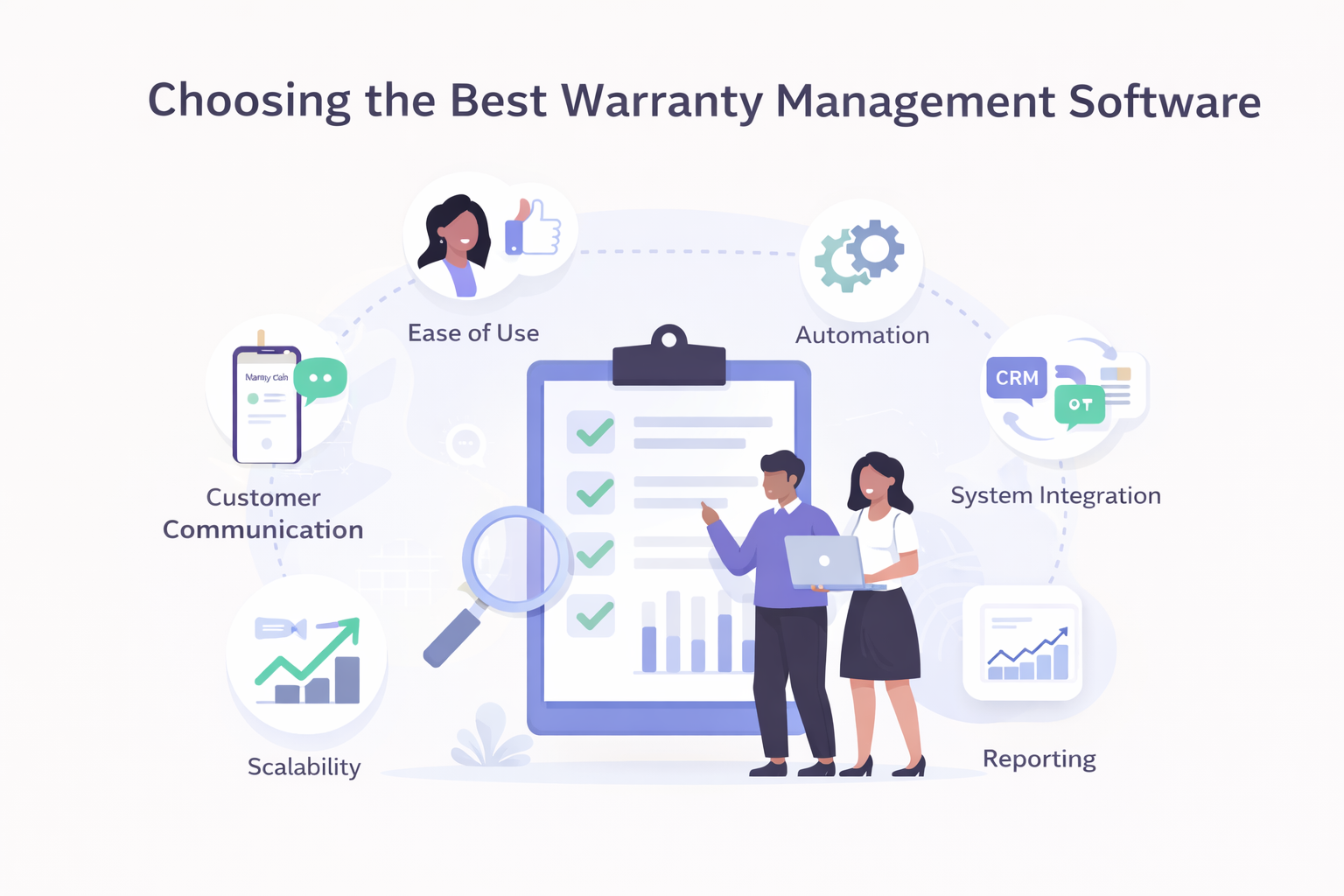
Choosing the right warranty management software depends on your business size, claim volume, and how complex your warranty processes are. Not every business needs a large-scale automated platform, but every business benefits from having a clear plan.
Once you understand what to look for, take time to match each feature to your actual business needs. Start by mapping your current warranty process, identify where delays happen, which tasks are repetitive, and what data you lack visibility on.
If your team manages only a handful of claims each month, a simple manual setup may still serve you well. But if you deal with growing product lines, multiple service partners, or increasing customer claims, a dedicated warranty management solution becomes essential.
Request demos from shortlisted vendors or platforms, check how easily the system integrates with your existing tools, and test the user experience for both your team and customers. The best software for warranty management is the one that simplifies your operations, scales with your growth, and creates a smoother experience across every post-purchase touchpoint.
Dyrect is a top-rated solution for managing warranties and replacements across multiple industries. Leading brands such as Briggs and Riley, Mobilla, and Neeman’s use Dyrect to simplify their post-purchase processes.
From premium luggage and lifestyle products to consumer electronics and footwear, Dyrect helps businesses automate warranty registration, claim handling, and replacements with ease.

Top brands across industries have realized that great products alone do not build loyalty. What happens after the sale often defines how customers remember a brand. These companies transformed their warranty handling using Dyrect’s automation-first warranty management software, turning slow manual processes into seamless digital experiences.
Mobilla, a leading consumer electronics brand, faced slow claim cycles and limited visibility into customer data. Warranty claims once took 30 days to process, frustrating both customers and service teams.
After implementing Dyrect’s digital warranty registration and claim automation system, everything changed. Customers began registering their products by simply scanning a QR code on the packaging, activating their warranty in seconds. This small shift had a huge impact. Claim processing time dropped from 30 days to just 5, and Mobilla saw a 40 percent increase in the number of claims processed monthly.
With first-party customer data now flowing directly into their system, Mobilla could engage buyers more effectively.
By connecting warranty management to customer engagement, Mobilla turned post-purchase service into a growth channel.
R for Rabbit, a well-known baby products brand, wanted to simplify warranty registration and make data collection effortless. Earlier, warranty registrations were scattered across channels, and it was difficult to analyze product performance or customer preferences.
With Dyrect’s warranty management system, customers could now register any product by scanning a single QR code that led them to a dedicated registration page. This unified process not only improved convenience but also gave the brand real-time visibility into registrations and warranty trends.
Behind the scenes, Dyrect’s dashboard helped the R for Rabbit team understand which products were most popular, which ones saw higher claim rates, and how customers interacted post-purchase. These insights became key to their marketing and product planning.
For Briggs and Riley, a premium luggage brand known for its lifetime guarantee, warranty management had always been central to customer trust. However, the old process required customers to create store accounts just to register products, which made the experience longer and less personal.
By switching to Dyrect’s warranty management platform, Briggs and Riley made registration frictionless. Customers could now complete it in seconds without needing a login.
This simple change delivered measurable results.
For Briggs and Riley, it became a bridge between post-purchase service and customer relationship building.
Still unsure about which warranty management software fits your business best. The easiest way to find out is to see it in action.
At Dyrect, we believe you shouldn’t have to guess how automation can work for your brand, you should experience it. That’s why we offer a free demo of our digital warranty management system, where you can explore how claims, registrations, and analytics all come together in one seamless platform.
See firsthand how leading brands are using Dyrect to simplify post-purchase processes and gain better control over warranty operations.
Book a Free Demo and discover how Dyrect can help your business manage warranties smarter, faster, and more efficiently.
.svg)
Join us on your journey to smart, sustainable growth.

Learn the strategies about how to acquire new customers, increase LTV & reduce CAC.


AppleCare is the most profitable business unit. Learn how they went about doing & what you can implement in your business.

We bring brand warranties at one single place. Check your industry & competitor Warranty terms.
Generating after-sales revenue is tough, and we understand that. We exactly bring the know-how.
* Biweekly newsletter, right in your inbox.
