
Introduction
Dealing with warranty claims shouldn't feel like running another business inside your business. Yet for many companies, the warranty management process still turns into a maze of forms, emails, and manual follow-ups. Teams spend valuable hours tracking warranty returns, verifying claims, and coordinating replacements, often without a clear view of what’s happening across the system.
When warranty claims and returns are handled manually, every step takes extra effort. Tracking product serial numbers, confirming coverage, coordinating with service partners, or processing reimbursements, each task demands attention and time. The result is slower turnaround, inconsistent data, and a lot of internal back-and-forth.
Here’s what this usually looks like:
- You receive warranty requests across multiple channels website forms, emails, even messages.
- Proof of purchase and product images come in different formats.
- Data about claims, repairs, and returns is scattered across Excel sheets, Google Drive folders, and shared inboxes.
- Supplier coordination happens over long email threads.
- Refunds or replacements take multiple approvals before they move forward.
If this feels familiar, you’re already aware of how challenging it can be to manage warranty claims efficiently. As your product range grows and customer volume increases, these gaps multiply. Suddenly, warranty tracking turns from a routine task into a daily operational headache.
In this complete guide, we’ll unpack how a modern warranty management solution works, what makes automated warranty tracking software essential, and how brands are using it to build smoother, more reliable post-purchase experiences.
TL;DR
Warranty management software helps product brands move warranty operations out of inboxes and spreadsheets into a structured digital workflow. This guide covers how warranty management works, what features to look for, how pricing breaks down, which platforms serve which business types, and what real brands achieved after implementation.
For D2C, ecommerce, and omnichannel product brands specifically: Dyrect is the purpose-built warranty management platform covering registration, claims, replacements, returns, and customer data in one system. It is rated 4.8 on G2 and 4.9 on the Shopify App Store. Plus, it already powers 500+ brands across US, Canada, UK, and Singapore.
Warranty Management by the Numbers
Most brands treat warranty as a cost of doing business and leave it at that. But the data tells a different story. Warranty is one of the largest controllable cost centers for any product company, and how you manage it directly affects your margins, your customer relationships, and your product roadmap.
According to Warranty Week, $30.37 billion is the total amount U.S.-based manufacturers paid in warranty claims in 2025, a 4% increase from 2024. They set aside $33.41 billion in warranty accruals and held $71.89 billion in warranty reserves at the end of 2025, an unprecedented 17% increase from the prior year.
2 to 5% of a manufacturer's revenue is typically consumed by warranty claims. For a company doing $100 million in annual sales, that translates to $2 million to $5 million per year going toward fixing or replacing products that failed under warranty. For larger companies, the numbers are staggering. Ford, GM, and Tesla alone spent $11.75 billion on warranty claims in 2024.
$159.38 billion is the size of the extended warranty market as of 2025, projected to reach $240.78 billion by 2030 at 8.6% CAGR. Consumer electronics is the fastest-growing segment at 8.5% CAGR. (Source: Mordor Intelligence)
2 to 4% of a company's warranty costs come from fraudulent claims. Without proper validation systems like serial number checks, proof-of-purchase verification, and claim history tracking, brands lose money to illegitimate claims they could easily prevent.
For D2C brands, the impact is amplified. Unlike large manufacturers who can absorb warranty costs across massive volumes, a growing D2C brand feels every unnecessary claim, every delayed resolution, and every customer who decides not to buy again because their warranty experience was poor. This is why warranty management software is not optional for product brands at scale. It is infrastructure.
What Is Warranty Management Software?
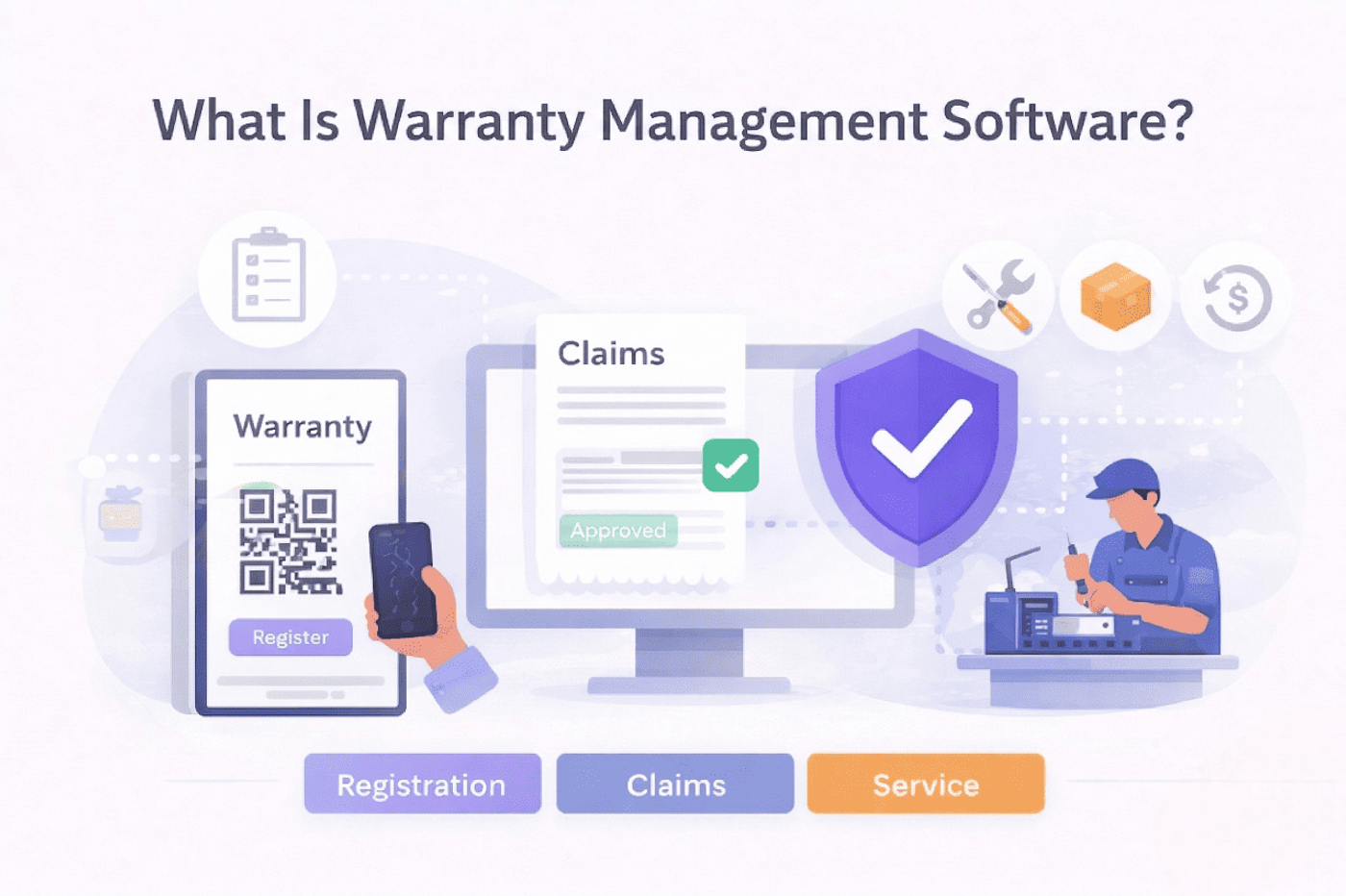
Warranty management software is a digital system that helps brands handle product warranties, claims, replacements, repairs, and returns from one place. It replaces manual tracking across emails, spreadsheets, shared folders, and disconnected service teams with a structured workflow that is easier to manage and monitor.
For brands handling high claim volumes or working with multiple service partners, the biggest challenge is not just approving claims. It is tracking warranty coverage accurately, validating proof of purchase, coordinating service or replacement, and keeping customers updated without delays. Warranty management software solves this by centralizing product, customer, and claim data in one platform.
A typical warranty management software platform helps businesses:
- register products after purchase
- verify warranty eligibility and coverage
- collect claim details, invoices, images, or videos
- route claims for approval, repair, replacement, or refund
- track return shipments and service status
- monitor claim volume, turnaround time, and defect trends
With all warranty data in one system, teams can process claims faster, reduce manual work, and give customers better visibility into claim status. This is especially valuable for D2C brands, electronics companies, appliance brands, and any business managing post-purchase support at scale.
Why Warranty Management Software Matters for Businesses
Warranty management matters deeply because it shapes how customers feel about your brand after they buy. In today’s competitive market, the post-purchase experience influences whether a customer becomes a repeat buyer or looks elsewhere. According to recent research,
90% of consumers say the post-purchase experience is just as important as the product itself..
A strong warranty management software solution directly impacts businesses in two main areas:
1. Customer Experience
When a warranty claim is delayed or unclear, it can leave customers feeling uncertain and frustrated. Modern customers expect faster responses, predictable timelines, and real-time updates. Research also shows that 93% of customers are more likely to buy again from a business that provides excellent customer service during the post-purchase period.
2. Operational Efficiency
Manual warranty tracking often means teams spend valuable time searching through folders, replying to repetitive queries, and managing returns by hand. A structured system to manage warranty claims centralizes all this information, automates validation and approvals, and generates alerts for pending actions. So, staff can focus on meaningful support tasks and proactive improvements, while routine work is handled by the system.
How Warranty Claim Management Used to Work And Why It Needed to Change
Warranty management has gone through a major shift over the past decade.
In the past, retailers and distributors handled most warranty claims. When a customer faced an issue, they would return to the store, fill out paper forms, and wait for updates. The brand itself had little direct contact with the customer.
Today, things are completely different.
D2C Direct-to-Consumer brands now own the entire customer journey from purchase to warranty claim. Customers expect fast, transparent, and digital support. They want to register products in seconds and track claims just like they track deliveries.
Then vs Now: The Evolution of Warranty Management
How Does Warranty Claim Processing Works
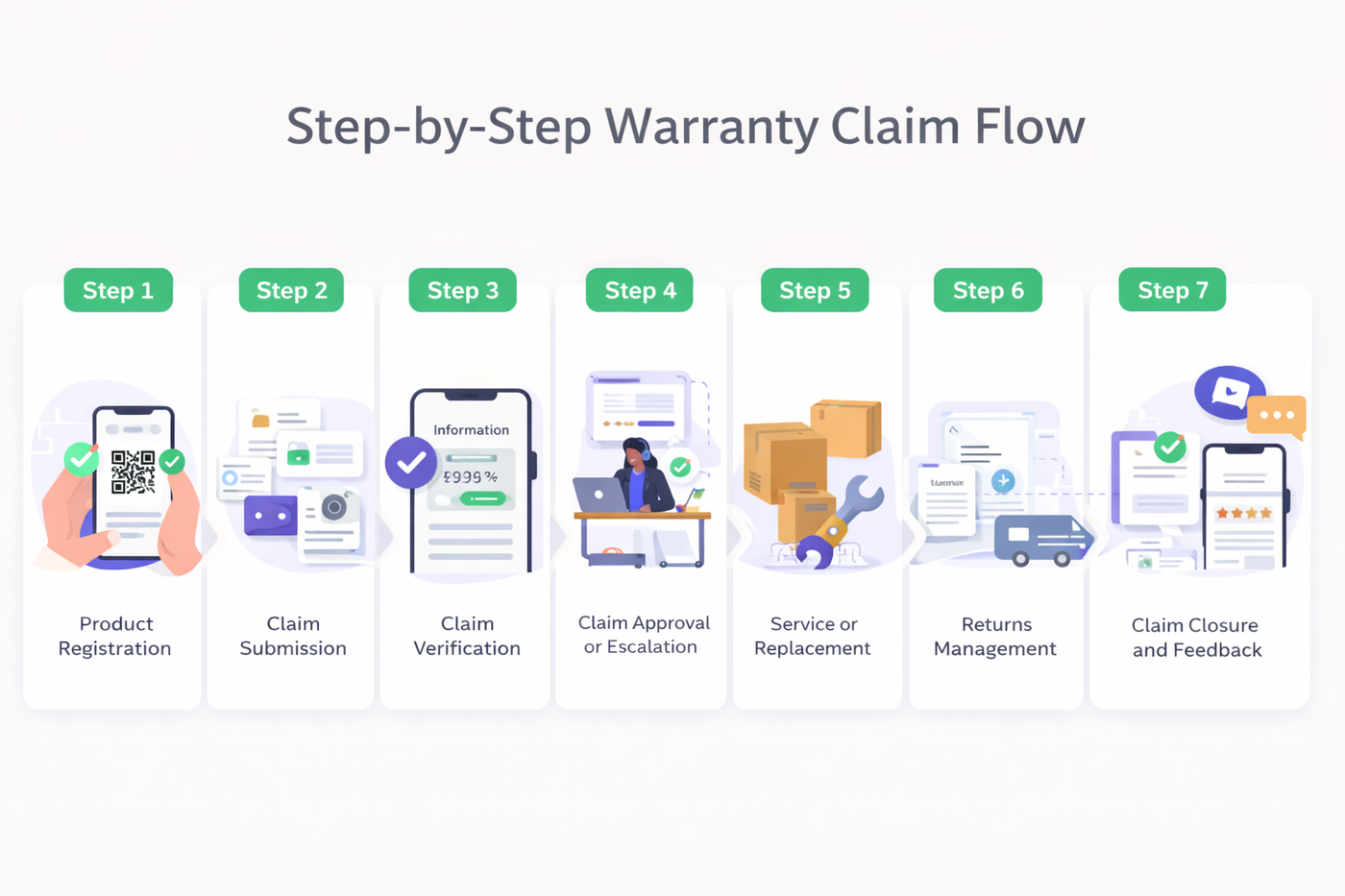
Warranty claim processing is the structured workflow that moves a customer's warranty request from submission through verification, approval, service action, and resolution.
The process starts the moment a customer reports a product issue. From there, each claim moves through a defined sequence until it’s resolved.
Step-by-Step Warranty Claim Workflow
Step 1: Product Registration
The process begins when a customer registers their product.
They can do this by scanning a QR code, filling a form online, or signing up through a brand portal.
The system stores important details like product model, purchase date, and customer information.
This registration becomes the base for future warranty claims.
Step 2: Claim Submission
When a product fails or has an issue, the customer raises a warranty claim.
They usually provide:
- The product’s serial number or registration ID
- Proof of purchase
- Images or videos showing the issue
The claim is recorded in the warranty management system for review.
Step 3: Claim Verification
The system or support team checks the claim details.
It verifies whether:
- The warranty period is still valid
- The issue falls under warranty coverage
- The product was not tampered with or misused
Automated systems validate most of this instantly using product data and policy rules.
Step 4: Claim Approval or Escalation
If the claim meets the warranty criteria, it is approved automatically or by a service representative.
If there’s a mismatch in data or unclear evidence, it is escalated for manual review.
At this point, the customer is informed about the next steps through email or SMS notifications.
Step 5: Service or Replacement
After approval, the product goes for repair, replacement, or refund.
- For repairs, the service team receives an alert and schedules the fix.
- For replacements, the logistics partner ships a new product to the customer.
- For refunds, finance teams process payment after confirmation.
Every action is tracked in the system to maintain transparency.
Step 6: Returns Management
If the customer needs to send back the product, the system generates an RMA (Return Merchandise Authorization).
It includes a return label, tracking ID, and address details.
The logistics partner handles pickup, and the product’s journey is tracked until it reaches the service center.
Step 7: Claim Closure and Feedback
Once the product is repaired or replaced, the claim is marked as closed.
The customer receives a notification and may be asked to share feedback on their experience.
The system stores all claim data for future reporting and analysis.
A well-defined warranty claims management process ensures that customers receive fast service and that internal teams can track every claim.
What Is the Difference Between Manual and Automated Warranty Management?
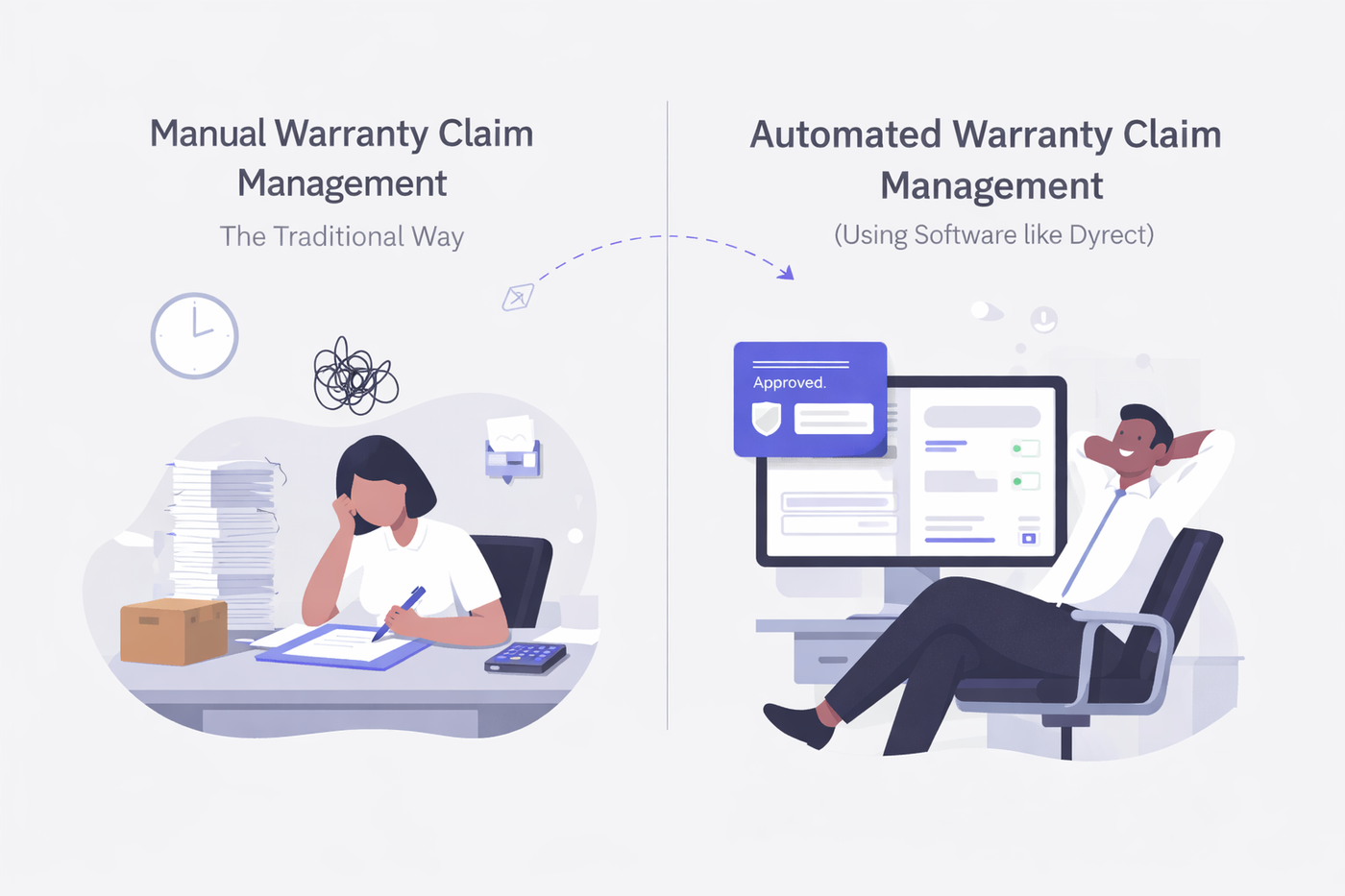
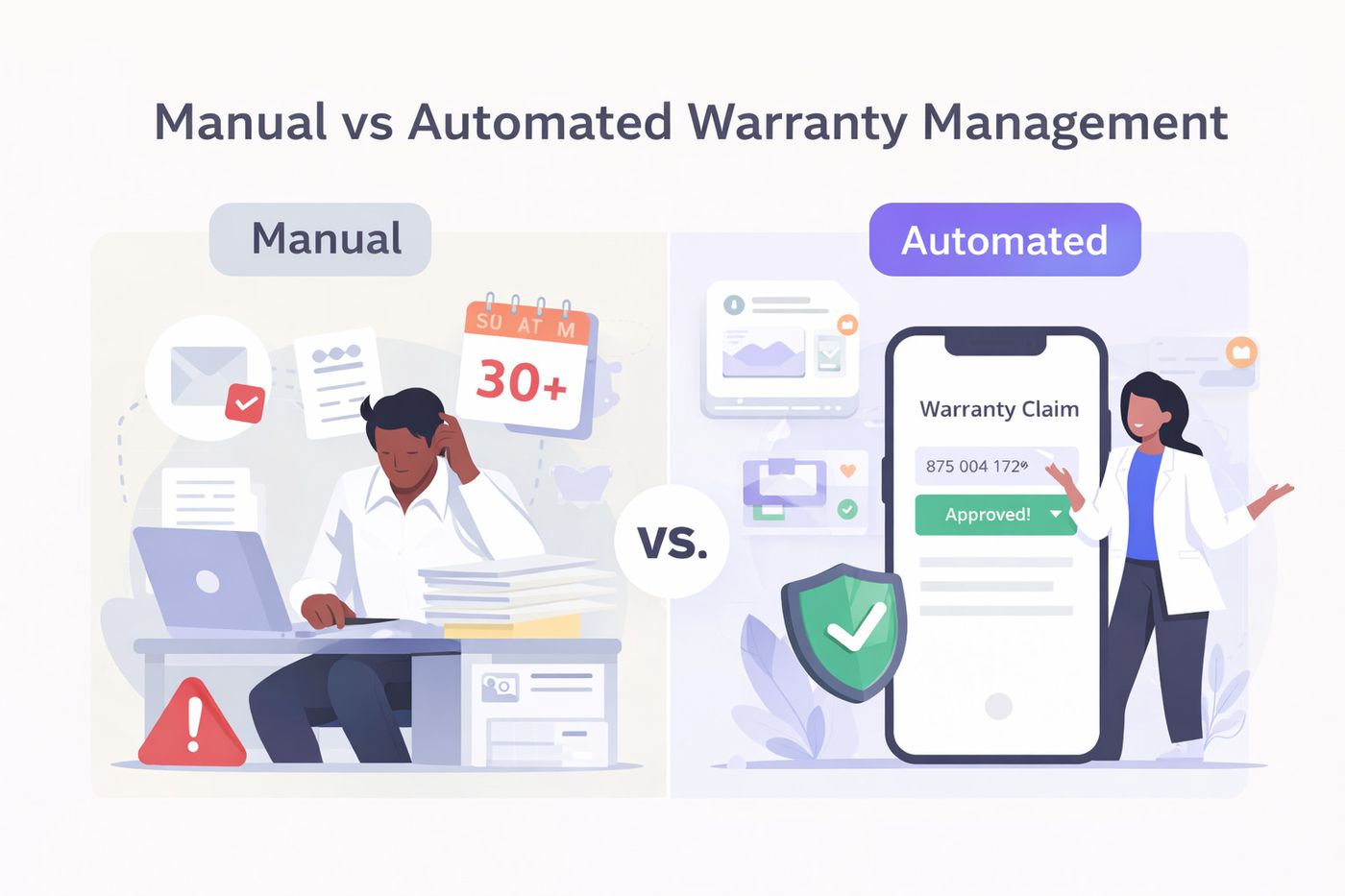
Warranty management can be handled in two ways manually or through automation. The difference between the two defines how efficiently your business can serve customers, resolve claims, and grow sustainably.
In many companies, warranty processes still run on spreadsheets, shared folders, and email threads. While this may work in the early days, it often breaks down as product lines expand and claim volumes rise. Automation through warranty management software brings structure, accuracy, and speed by turning these disconnected tasks into one seamless digital flow.
Manual Warranty Claim Management: The Traditional Way
In a manual setup, most of the work is done by people using basic tools.
How it works:
- Customers submit claims through emails or phone calls.
- Teams collect invoices, images, and serial numbers manually.
- Each claim is checked and approved by different people through long email chains.
- Reports are created by merging data from multiple sheets.
This process can be slow and error-prone. Each claim may take days or even weeks to verify. The lack of visibility also makes it hard to track how many claims are pending or which ones need urgent action.
Common challenges of manual warranty management:
- Data scattered across channels
- Claim details, product info, and proofs are stored in different locations.
- Inconsistent tracking
- There’s no single dashboard showing the live status of claims.
- Human dependency
- Progress depends on individuals responding or forwarding files.
- Delays and errors
- Manual validation often leads to miscommunication or data mismatch.
- Poor customer experience
- Customers have to wait for responses and updates manually shared by support staff.
Automated Warranty Claim Management (Using Software like Dyrect)
The modern way to manage warranties is driven by automation. Instead of relying on emails and spreadsheets, businesses now use dedicated warranty management software like Dyrect to handle the entire claim process digitally. These systems bring all warranty activities - from product registration to claim closure, into one connected platform.
How it works:
- Customers can register products instantly by scanning a QR code or filling a quick online form.
- The warranty management system automatically validates warranty coverage using product serial numbers or purchase data.
- Once verified, the claim is routed to the right team or service partner for resolution.
- Customers receive real-time notifications about every step, so they never need to follow up manually.
- Businesses access live dashboards to monitor claim volume, turnaround time, and performance trends.
This digital approach saves hours of manual effort and ensures complete visibility for both customers and internal teams.
Key Advantages of Using Warranty Management Software like Dyrect:
1. Speed and Accuracy: Claim validation and approvals happen automatically, cutting processing times drastically.
2. Consistency: Every claim follows standard rules, ensuring fair and predictable outcomes.
3. Transparency: Customers can see exactly where their claim stands at any moment.
4. Centralized Data: All product, customer, and claim information stays in one secure place.
5. Actionable Insights: In-built analytics highlight trends and performance metrics that help improve future processes.
Warranty Management Software vs. Spreadsheets, CRMs, and ERPs
Many brands try to manage warranties using tools they already have. Here is how those approaches compare to purpose-built warranty software.
Spreadsheets work at very low volumes. CRMs can track basic information but lack claims engines and coverage verification. ERP modules cost significantly more and require dedicated IT resources. Purpose-built warranty software handles the full lifecycle with less setup and lower cost for mid-market and D2C brands.
How Warranty Tracking Software Can Reduce Claims and Returns
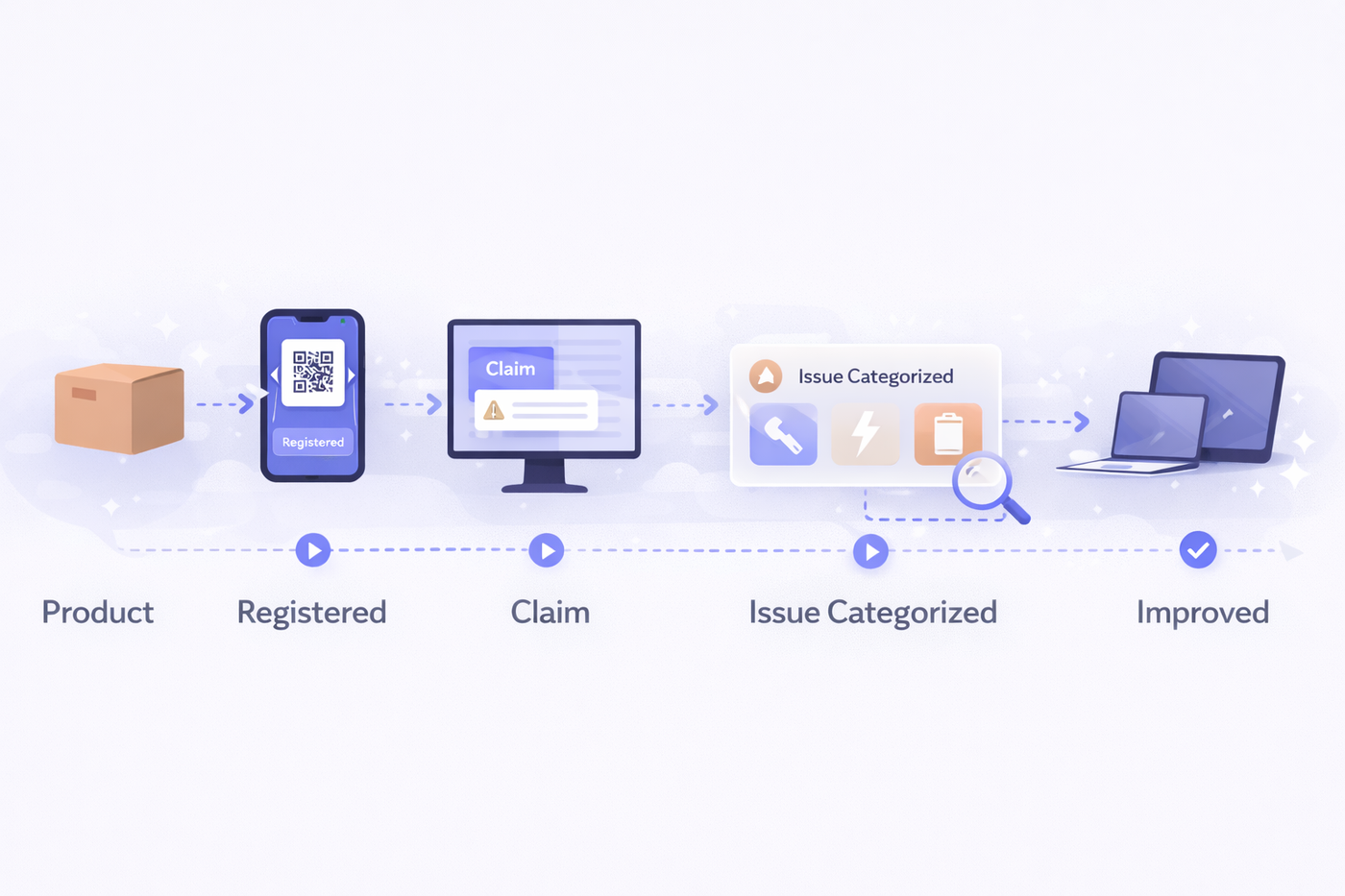
Warranty tracking software helps businesses reduce claims and returns by bringing visibility, structure, and learning into the process. It connects customer issues with product data, service actions, and outcomes in one place.
Instead of treating each claim as a separate event, the system looks at patterns across all claims.
Product Sold → Warranty Registered → Claim Raised → Issue Categorized → Data Analyzed → Product or Process Improved → Fewer Future Claims
Every claim adds information that helps teams act smarter next time.
Key Ways It Reduces Claims and Returns
Analytics highlights recurring issues early. Product teams fix weak components. Operations teams improve handling and turnaround time. Support teams guide customers with clearer instructions.
As issues reduce at the source, fewer claims are raised and returns decline.
How to Choose the Best Warranty Management Software
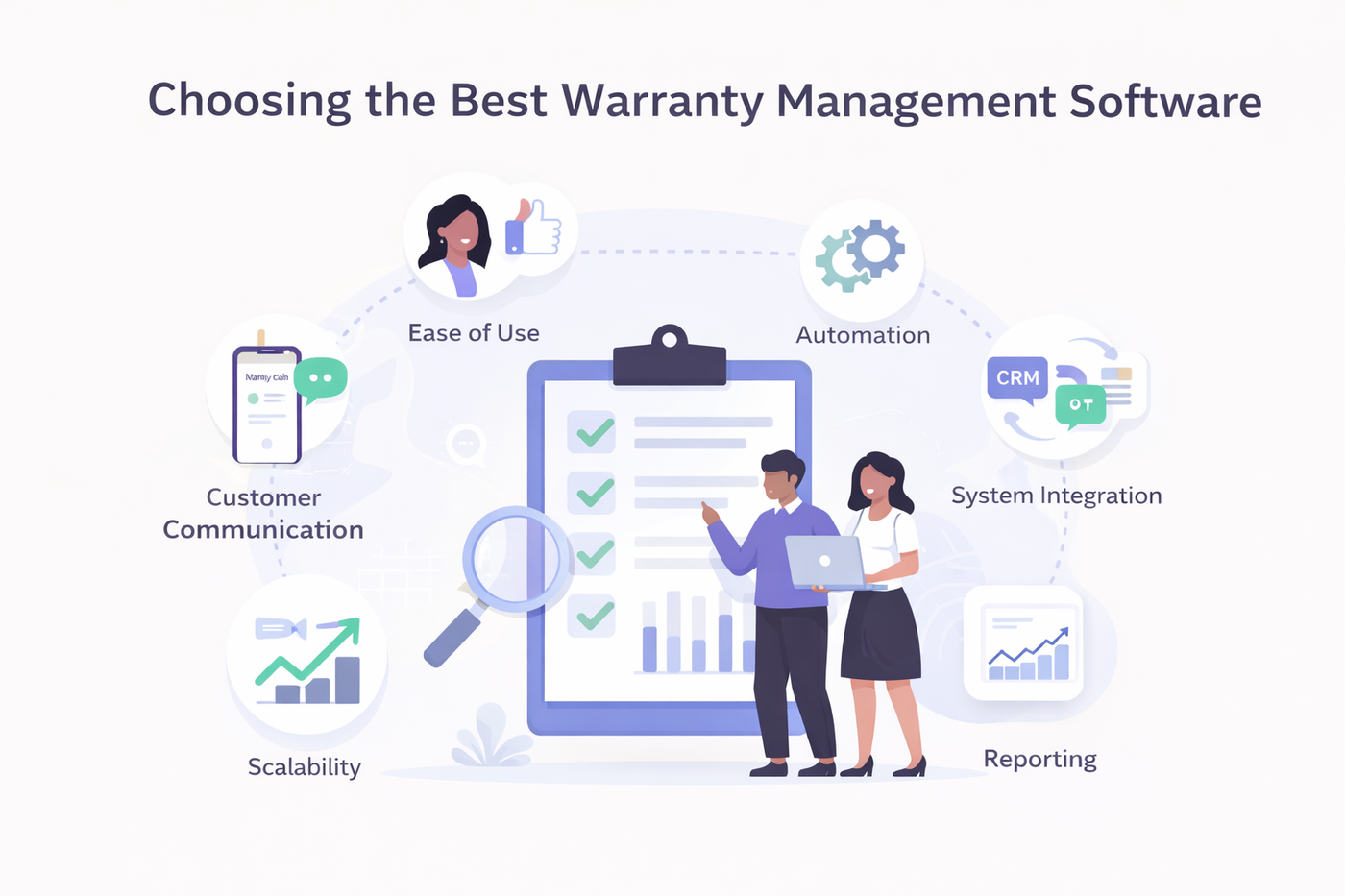
Choosing the right warranty management software depends on your business size, claim volume, and how complex your warranty processes are. Not every business needs a large-scale automated platform, but every business benefits from having a clear plan.
What to Look For in a Warranty Management System Software
What Is the Best Warranty Management Software in 2026?
How Top D2C Brands Automated Warranty Management
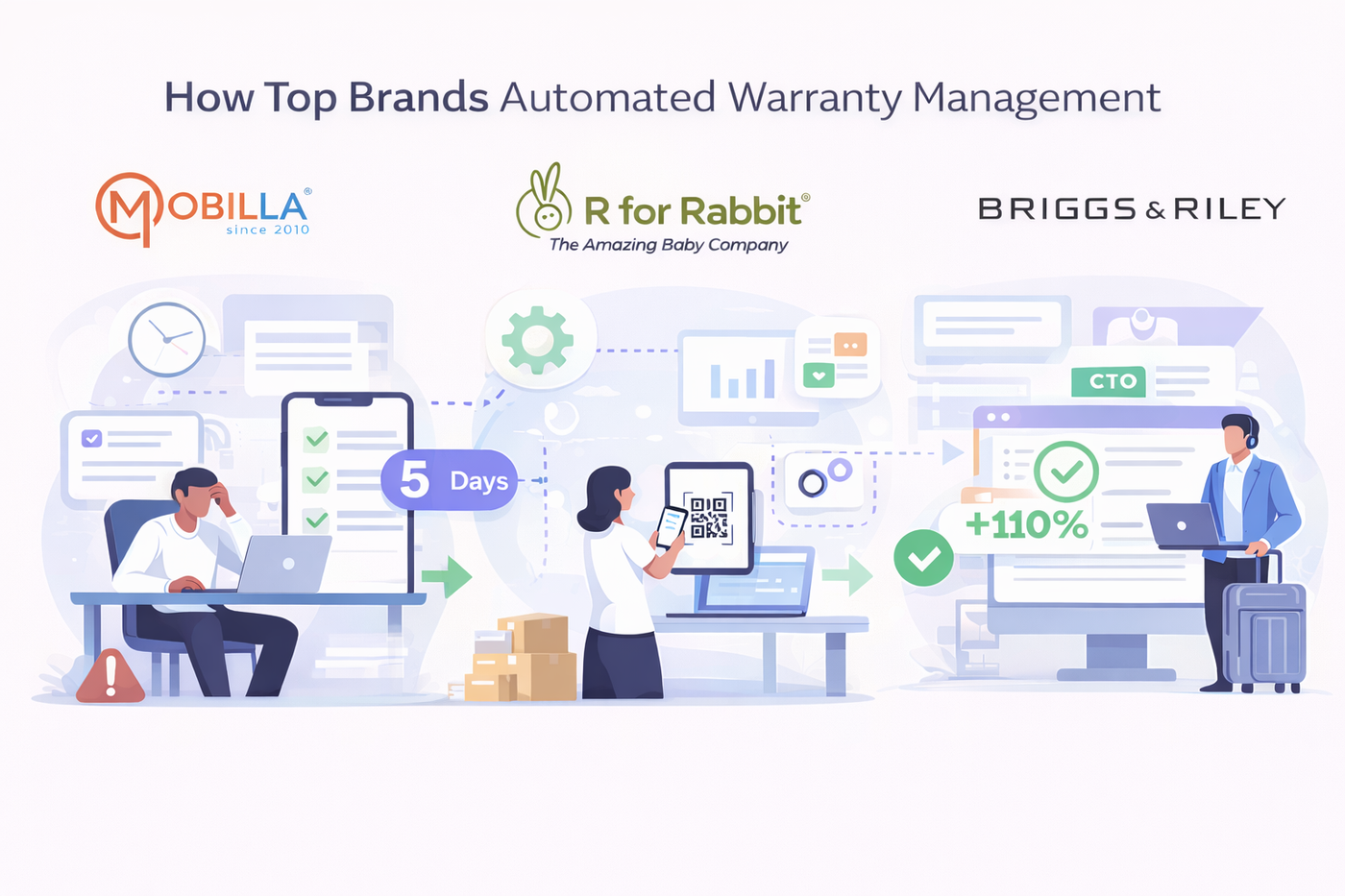
Top brands across industries have realized that great products alone do not build loyalty. What happens after the sale often defines how customers remember a brand. These companies transformed their warranty handling using Dyrect’s automation-first warranty management software, turning slow manual processes into seamless digital experiences.
1. Mobilla Reduced Claim Time from 30 Days to 5
Mobilla, a leading consumer electronics brand, faced slow claim cycles and limited visibility into customer data. Warranty claims once took 30 days to process, frustrating both customers and service teams.
After implementing Dyrect’s digital warranty registration and claim automation system, everything changed. Customers began registering their products by simply scanning a QR code on the packaging, activating their warranty in seconds. This small shift had a huge impact - claim processing time dropped from 30 days to just 5, and Mobilla saw a 40% increase in the number of claims processed monthly.
With first-party customer data now flowing directly into their system, Mobilla could engage buyers more effectively. The results were tangible:
- 25% of sales25% of sales that once came through marketplaces shifted to Mobilla’s own website.
- Customer retention increased by 20%.
- Revenue from cross-selling and upselling grew by 35%.
By connecting warranty management to customer engagement, Mobilla turned post-purchase service into a growth channel.
2. R for Rabbit Simplified Warranty Registration
R for Rabbit, a well-known baby products brand, wanted to simplify warranty registration and make data collection effortless. Earlier, warranty registrations were scattered across channels, and it was difficult to analyze product performance or customer preferences.
With Dyrect’s warranty management system, customers could now register any product by scanning a single QR code that led them to a dedicated registration page. This unified process not only improved convenience but also gave the brand real-time visibility into registrations and warranty trends.
Behind the scenes, Dyrect’s dashboard helped the R for Rabbit team understand which products were most popular, which ones saw higher claim rates, and how customers interacted post-purchase. These insights became key to their marketing and product planning.
3. Briggs and Riley Increased Engagement by 110%
For Briggs & Riley, a premium luggage brand known for its lifetime guarantee, warranty management had always been central to customer trust. However, the old process required customers to create store accounts just to register products, which made the experience longer and less personal.
By switching to Dyrect’s warranty management platform, Briggs & Riley made registration frictionless. Customers could now complete it in seconds without needing a login.
This simple change delivered measurable results:
- 30% increase in product registrations
- 110% increase in customer engagement
For Briggs & Riley, it became a bridge between post-purchase service and customer relationship building.
How Is AI Used in Warranty Management Software?
Warranty management is one of the areas where AI is starting to have practical, measurable impact. Several platforms are integrating AI capabilities, and it is worth understanding what is real versus what is marketing.
AI-powered claim validation. Instead of support agents manually reviewing every claim, AI can check submitted photos against known defect patterns, validate serial numbers against registration records, cross-reference claim history to detect duplicates, and approve straightforward claims without human involvement. This reduces handling time for routine claims and lets human agents focus on complex cases.
Fraud detection. AI can flag suspicious patterns that manual review would miss: the same serial number appearing in multiple claims, unusually high claim rates from specific regions, claims submitted outside normal time patterns, or photos that appear recycled from previous submissions. Given that warranty fraud costs brands 2 to 4% of their warranty spend, even modest improvements in fraud detection pay for themselves.
Predictive analytics. By analyzing claim data over time, AI can predict which product batches are likely to generate higher claim rates, allowing brands to proactively address quality issues before they become widespread.
Automated customer communication. AI-powered systems can generate personalized status updates, suggest resolutions based on the type of issue reported, and route customers to relevant self-help resources before a claim is even submitted.
Dyrect has introduced AI capabilities through Dyrect AI, focused on automating warranty support interactions. Other players like iWarranty are building AI-native architectures with multiple specialized agents for claims processing, fraud detection, and repair routing. This is an area that will evolve rapidly, and brands should consider AI readiness when choosing a warranty management platform today.
Warranty Management Software Pricing: What to Expect in 2026
Well, the most common mistake brands make is evaluating enterprise-priced tools because they appear in "best warranty management software" lists. If you are a D2C brand, even a large one, tools like PTC and Syncron are designed for a completely different operating model with dealer networks, supplier chargebacks, and multi-tier service partner coordination. They are not just expensive. They are solving a different problem.
Looking for Warranty Management Software?
Still unsure about which warranty management software fits your business best? The easiest way to find out is to see it in action.
Dyrect offers a practical way to evaluate how a warranty management platform would support your operations in real working conditions. Our experts are available 24/7 to understand your business needs, walk through your current warranty process, and guide you through a tailored demo based on your products, workflows, and support requirements.
You can also explore Dyrect through a free trial to see how product registration, claim handling, replacements, returns, and reporting work within one connected system. Dyrect is rated 4.8 on G2 and 4.9 on Shopify App Store, with users consistently highlighting ease of use, responsive customer support, seamless integrations, stronger customer engagement, and improved retention.
Here's G2's Review summary:
"Users consistently praise Dyrect for its ease of use and exceptional customer support, noting that the platform simplifies warranty management and enhances customer engagement. Many appreciate how it integrates seamlessly with existing systems, helping businesses collect valuable customer data and improve retention rates."
Related Guides
- Best Warranty Management Software for Shopify (2026)
- Best Warranty Registration Software for Brands (2026)
- How to Set Up an Automated Warranty Program (2026)
- Warranty Management KPIs Every D2C Brand Should Track
- How to Move Warranty Claims Off Google Forms and Spreadsheets
Book a Free Demo and discover how Dyrect can help your business manage warranties smarter, faster, and more efficiently.
Frequently Asked Questions
What is warranty management software?
Warranty management software automates the full warranty lifecycle for product brands. It covers product registration, claims intake, eligibility verification, resolution tracking, and customer communication. Instead of managing claims through spreadsheets, email threads, and paper warranty cards, brands use one centralized platform to process and track everything digitally.
How much does warranty management software cost?
Pricing depends on the platform type. Enterprise solutions like SAP and PTC cost $50,000-$200,000+ per year with 6-12 month implementations. Mid-market platforms designed for D2C and ecommerce brands range from $600-$25,000 per year depending on volume. Entry-level tools start at $49/month. The right tier depends on catalog size, claim volume, and the number of sales channels involved.
What is the strongest warranty management software for D2C and ecommerce brands?
Purpose-built platforms like Dyrect are designed specifically for brands selling direct-to-consumer. Key differentiators include QR-based product registration across all sales channels, Shopify-native integration, digital warranty cards, and claims automation. Enterprise tools like Syncron and PTC serve manufacturers and OEMs well but require significant customization for D2C workflows.
What is the difference between a warranty management system and warranty management software?
A warranty management system refers to the broader operational framework a company uses to handle warranties. This includes policies, workflows, team structures, and tools. Warranty management software is the specific technology platform within that system. A company might run a warranty management system with manual steps. The software component automates and digitizes those steps.
How does warranty registration work for products sold on Amazon, retail stores, or through distributors?
Third-party channels typically share no customer data with the brand. QR codes on product packaging solve this. Regardless of purchase channel, the customer scans the QR code, lands on a branded registration page, and submits their information. This captures verified first-party data and activates the digital warranty. The experience is identical whether the product came from Shopify, Amazon, or an independent retailer.
What features should ecommerce brands look for in warranty management software?
The features that matter for D2C brands differ from enterprise manufacturer needs. Prioritize omnichannel product registration (QR codes for offline, embedded widgets for your online store), automated claims workflows with eligibility verification, serial number validation, a customer-facing self-service portal, integrations with Shopify, Klaviyo, and HubSpot, real-time analytics on claim patterns, and digital warranty cards that replace paper inserts.
Can warranty management software prevent fraudulent warranty claims?
Yes. Modern platforms use multiple layers of fraud prevention. Serial number validation ensures each product registers once. AI-powered pattern detection flags suspicious behavior like multiple claims from the same address or claims filed outside the warranty window. Proof-of-purchase verification confirms the product was purchased through a legitimate channel.
How long does it take to implement warranty management software?
Enterprise solutions like SAP, PTC, and Syncron typically require 6-12 months due to ERP integrations and organizational change management. Platforms designed for D2C and ecommerce brands deploy within 1-4 weeks. Pre-built Shopify integrations, native QR code generation, and drag-and-drop form builders mean no developer involvement is required.
What is a digital warranty card?
A digital warranty card replaces the paper warranty certificate inside product packaging. After registration, the customer receives it via email or SMS. It contains product details, serial number, warranty start and end dates, and a link to file claims. Digital cards eliminate the risk of lost paper documents, reduce printing costs, and create a direct communication channel between brand and buyer.
How does warranty management software improve customer retention?
Warranty interactions are one of the few post-purchase moments where customers actively engage with a brand. When the experience is fast, transparent, and self-service, customers associate the brand with reliability. Beyond the claim itself, the registration and warranty portal becomes a channel for product education, accessory recommendations, and extended warranty offers. So what starts as a cost center becomes a retention and revenue engine.