PREVENT WARRANTY FRAUD
“We keep paying out claims on products we can't verify were ever bought from us.”
Stop paying out on fake warranty claims
Receipts can be faked in minutes and say nothing about which unit is being claimed. Dyrect checks every serial number when a product is registered and again when a claim arrives, so only genuine claims reach your team.
Read the full guide →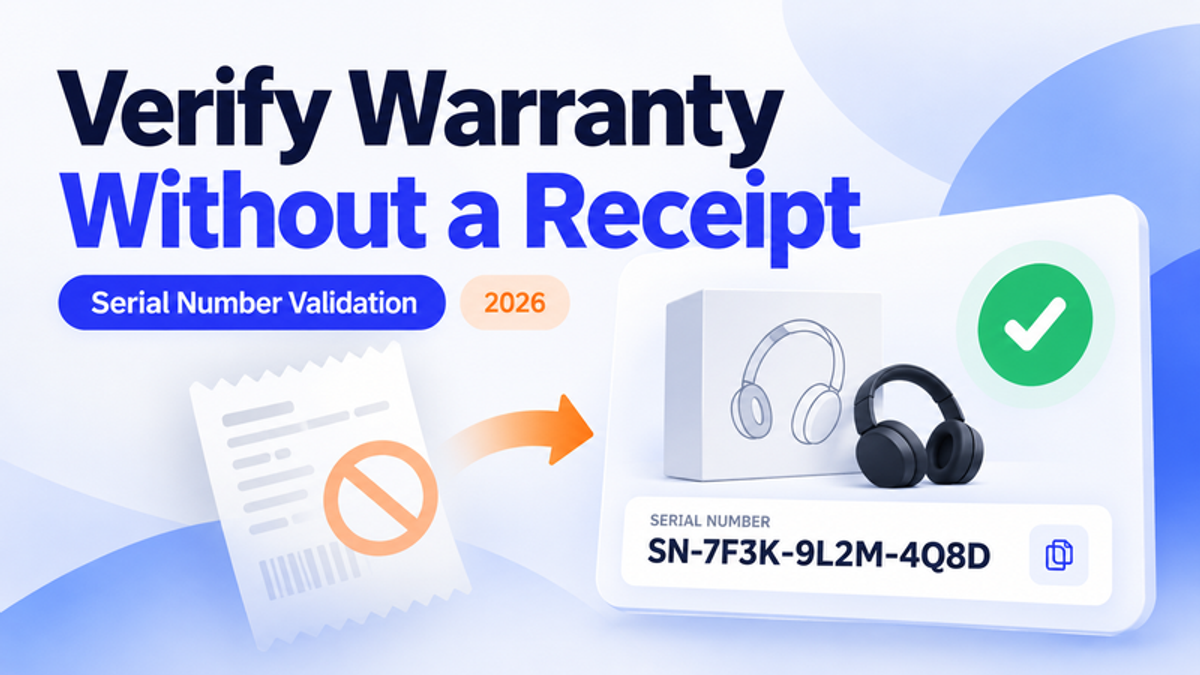
How Dyrect solves it
Three checks before a record exists
Every serial is checked when it is registered, so claims can be verified in seconds later

What changes with Dyrect
Verifying with receipts
- Receipts can be faked with AI image tools
- A receipt doesn't show which unit is being claimed
- Gift and secondhand owners have no receipt at all
- Agents chase documents on every claim
With Dyrect
- Every serial is checked against your catalogue
- Reused and wrong-SKU serials are blocked at registration
- Coverage is checked against the registered purchase date
- Agents see verified claims with full context
A closer look at each step
1. Upload the serial numbers you issue
Upload your existing serial list as the validation catalogue, with each serial mapped to its SKU. No serials yet? Dyrect generates sequential or random serials in bulk, ready to download in Excel for printing, or through the API.
- Dashboard
- Products
- Serialization
- Registrations
- Service & Claims
Serial numbers
Upload serials2. Every registration is checked
When a customer registers, Dyrect checks that the serial exists in your catalogue, matches the product being registered and hasn't been registered before. Anything that fails is stopped before a record is created, and duplicate attempts show up in your dashboard.
Validation rules
- Catalogue check
- On
- SKU match
- On
- Duplicate detection
- On
Incoming registrations
3. Ownership is on record before any claim
A passing registration creates a proof-of-ownership record: the buyer, serial, SKU, purchase date, sales channel and coverage period. The customer receives a digital warranty card confirming their coverage.
 Apex AppliancesDigital warranty cardApex Air Purifier 500Serial APX-7F3K-9L2M
- Owner
- Jordan Lee
- Purchased
- 12 May 2026
- Coverage
- 2 years
4. Claims are checked against that record
When a claim arrives, Dyrect looks up the serial's registration, checks the purchase date against the warranty period and reviews the claim history. Claims on expired coverage, unregistered serials or suspicious histories are flagged before an agent spends time on them.
New claim
- Customer
- Jordan Lee
- Issue
- Fan makes a grinding noise
- Filed
- 3 Feb 2027
Eligibility check
Quick answers
AI tools can now produce realistic fake receipts in minutes. Receipts also fade, get lost, never exist for gifts or secondhand products, and show a purchase without confirming which unit is being claimed. A registration record tied to the serial number is something your brand holds and controls.
At registration, Dyrect checks each serial against your uploaded catalogue, confirms it belongs to the product being registered and blocks serials that have already been registered. Failed attempts are stopped before a record is created, and duplicate attempts are visible in your dashboard.
No. If your products already carry serial numbers, upload your existing list as the validation catalogue. If the serial is hard to find, add a QR insert card or sticker to current packaging. For new launches, Dyrect can generate serials in bulk.
Dyrect uses check-digit validation and format matching to catch entry errors. If a serial looks like a typo, the customer is asked to re-check the number on their product instead of hitting a dead end.
Not without being flagged. Each serial is mapped to its SKU, so a serial from a budget model registered as a premium model shows up as a mismatch.
Use a fallback path, in order of strength: a bank or card statement, an invoice or order confirmation, the retailer account history, or the manufacture date decoded from the serial number. Documenting this path keeps unregistered claims consistent while your registration rate grows.
No. The catalogue check, SKU match and duplicate check run in real time, so the experience feels like any standard registration form.
Dyrect supports ownership transfer. The new owner registers under their own details, the serial stays the same and coverage continues from the original purchase date.
Serial-level tracking suits products with high unit value and real fraud risk, such as electronics, power tools and e-bikes, because it catches reused serials. Batch-level tracking suits lower-value items like fittings and consumables, where marking each unit is impractical.
Yes. Dyrect generates sequential or random serial numbers with configurable start numbers and batch sizes, downloadable in Excel for printing. Manufacturers can also generate serials through the API inside their own systems.
Other goals brands reach with Dyrect
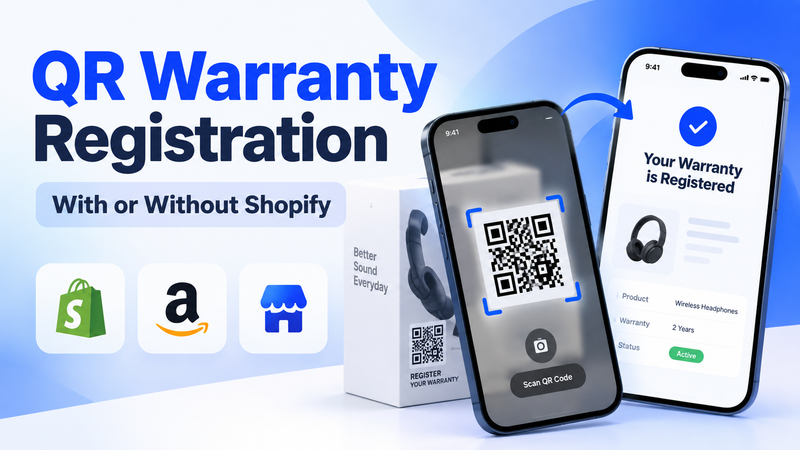
“We add registration cards to every box and almost nobody fills them in.”
Learn more →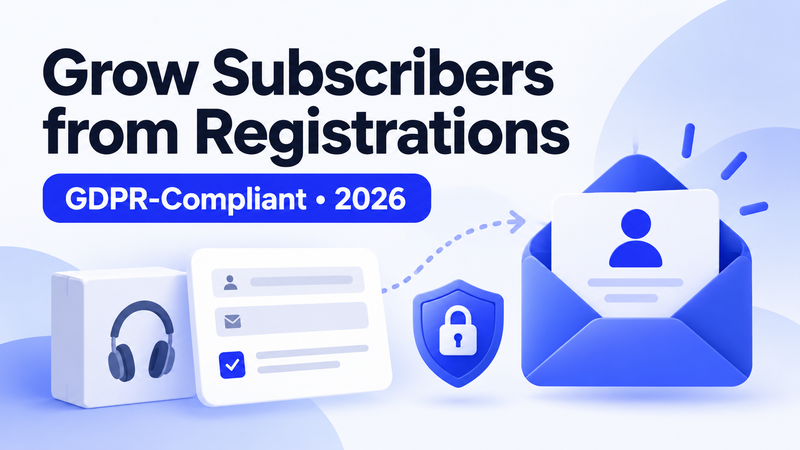
“Customers register their products, but we can't legally email most of them.”
Learn more →
“Warranty claims live in our inbox and take weeks to resolve.”
Learn more →